
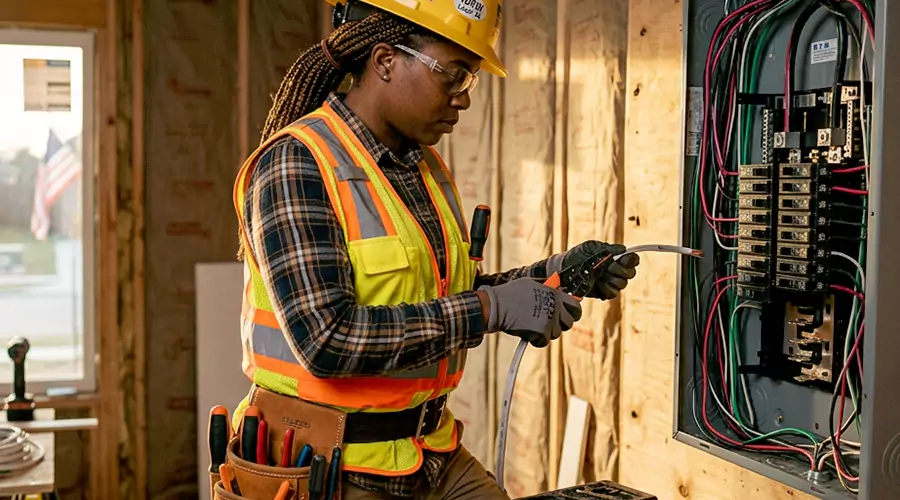
A home electrical inspection services appointment evaluates the safety and condition of your electrical system. A licensed electrician checks the electrical panel, wiring, outlets, grounding, and safety devices to identify hazards or code violations. The inspection looks for overloaded circuits, damaged wires, and improper installations that could lead to fire or shock risk. It also confirms that your system can handle modern electrical demand. You receive a clear report with any issues and recommended repairs. This process helps you fix problems early, improve safety, and ensure your home meets current electrical standards for reliable daily use.
What Is a Home Electrical Inspection and Why It Matters
A home electrical inspection is a detailed review of your electrical system. It identifies safety issues and ensures compliance with current electrical codes in the United States.
What an Inspection Focuses On
- Overall system safety
- Code compliance
- Proper electrical load handling
What Happens Before the Electrical Inspection Begins
The process starts with a brief discussion about your home and any known issues. The electrician may ask about flickering lights, breaker trips, or recent upgrades.
Information You May Be Asked
- Age of the home
- History of electrical problems
- Recent renovations or additions
What Electricians Check in the Electrical Panel
The electrical panel is the main control point for your system. Inspecting it reveals whether your home can safely distribute power.
Key Panel Components Reviewed
- Breaker condition and labeling
- Signs of overheating or corrosion
- Proper panel capacity
What to Expect When Wiring Is Inspected
Wiring condition is critical for safety and performance. Electricians check visible wiring and test circuits for proper function.
Common Wiring Issues Found
- Damaged or frayed wires
- Outdated wiring materials
- Loose connections
What Inspectors Look for in Outlets and Switches
Outlets and switches are tested to confirm they work safely. This includes checking grounding and proper installation.
Signs of Outlet or Switch Problems
- Loose or damaged outlets
- Missing grounding
- Burn marks or discoloration
What Grounding and Bonding Checks Include
Grounding protects your home from electrical shock. Bonding ensures all components are connected safely.
Why Grounding Matters
Proper grounding directs excess electricity safely into the earth. Without it, electrical shock risk increases. Grounding is required for modern electrical systems.
What Safety Devices Are Tested During Inspection
Modern homes rely on safety devices to prevent hazards. These devices are tested to confirm proper operation.
Devices Commonly Checked
- GFCI outlets in kitchens and bathrooms
- AFCI breakers for fire prevention
- Smoke detectors connected to electrical systems
What Code Violations May Be Found
Electrical codes change over time. Older homes may not meet current standards.
Common Code Issues
- Outdated panels
- Improper wiring methods
- Missing safety protections
What a Home Electrical Inspection Covers
Understanding what is included helps you know what to expect during the visit.
| Inspection Area | What Is Checked | Why It Matters |
|---|---|---|
| Electrical Panel | Breakers, wiring, capacity | Prevents overload and fire risk |
| Wiring | Condition and type | Ensures safe power distribution |
| Outlets and Switches | Function and grounding | Reduces shock risk |
| Safety Devices | GFCI and AFCI operation | Prevents electrical hazards |
| Grounding System | Proper connection | Protects against electrical faults |
Understanding Home Electrical Inspections
A home electrical inspection is a thorough evaluation of an electrical system to identify safety concerns, code violations, and signs of wear or damage. The inspection typically includes electrical panels, wiring, outlets, switches, grounding, and other key components to determine whether the system is operating safely and meets current electrical standards.
Inspection findings are usually documented in a detailed report that outlines any problems and recommends repairs or upgrades when needed. These evaluations help homeowners better understand the condition of their electrical system, reduce potential safety risks, and support reliable electrical performance over the long term.
How Long a Home Electrical Inspection Takes
Most inspections take between one and three hours depending on home size. Larger homes or older systems may require more time.
Factors That Affect Inspection Time
- Size of the property
- Age of electrical system
- Accessibility of wiring
What Happens After the Inspection Is Complete
After the inspection, you receive a report outlining findings. This report explains any safety concerns and recommended repairs.
What the Report Includes
- Identified hazards
- Code violations
- Suggested upgrades or repairs
What Repairs May Be Recommended
Not all issues require immediate repair, but some should be addressed quickly. Recommendations depend on the condition of your system.
Common Recommendations
- Replacing outdated wiring
- Upgrading electrical panels
- Installing additional circuits
When You Should Schedule a Home Electrical Inspection
Regular inspections help maintain safety and performance. Certain situations make inspections especially important.
When an Inspection Is Needed
- Before buying or selling a home
- After major renovations
- When experiencing electrical problems
How to Prepare for a Home Electrical Inspection
Preparation helps the inspection go smoothly. Making key areas accessible allows the electrician to complete a thorough review.
Simple Preparation Steps
- Clear access to electrical panel
- Ensure outlets are reachable
- Make a list of known issues
What a Home Electrical Inspection Does Not Include
An inspection focuses on evaluation, not full repair. Electricians identify issues but may schedule repairs separately.
What Is Not Included
- Major rewiring work
- Full system upgrades
- Cosmetic repairs
Why a Professional Inspection Is Worth It
A licensed electrician has the training to identify risks that are not visible. Professional inspections provide accurate results and reliable recommendations.
Benefits of a Professional Inspection
- Improved home safety
- Early detection of problems
- Better system performance
Final Takeaway for Homeowners
A home electrical inspection helps identify safety risks and ensures your system meets current standards. Regular inspections prevent major issues and improve reliability. A licensed electrician provides clear findings and recommendations so you can make informed decisions about your home’s electrical system.